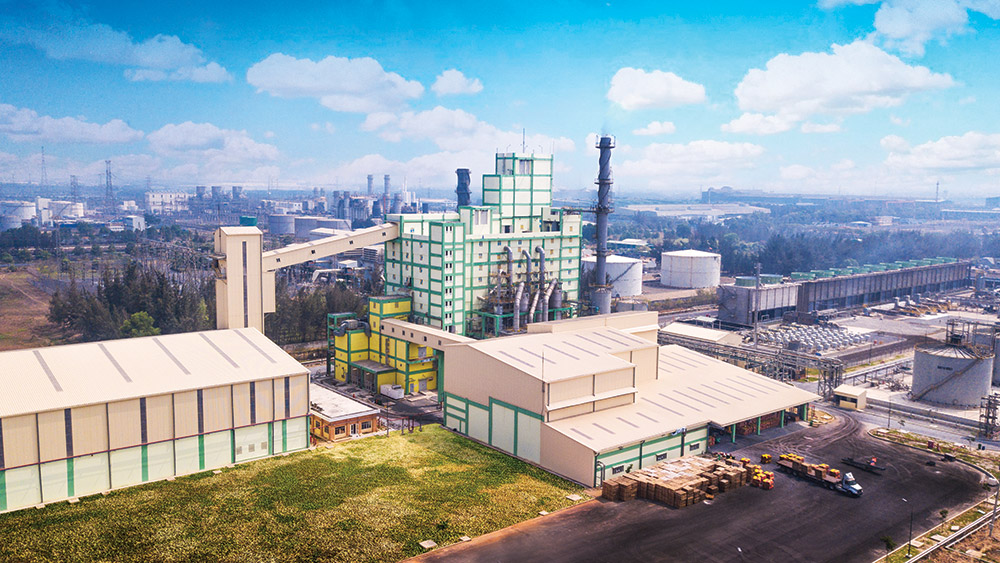
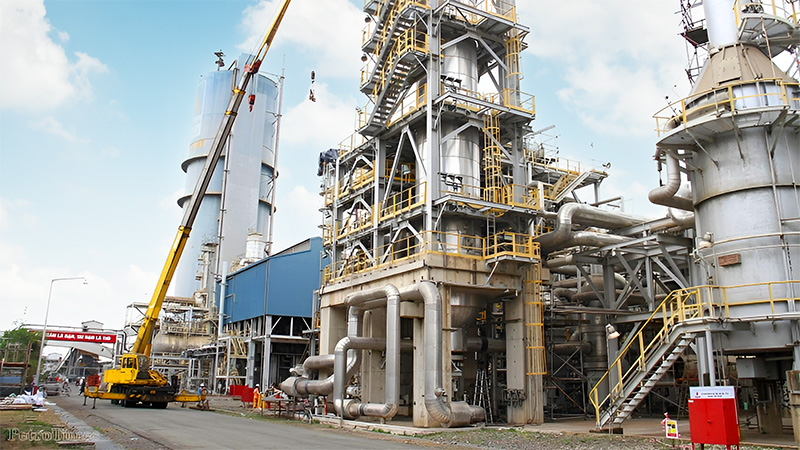
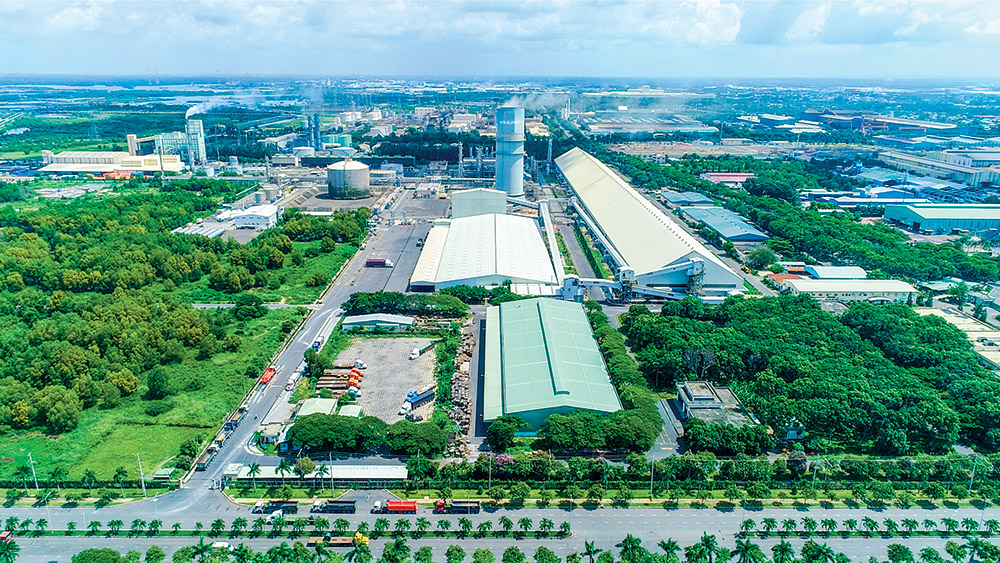
Fertilizer and chemical production are high-energy-consuming areas
due to the use of fossil fuels (natural
gas, gasoline, oil) as input materials and for operating machinery,
equipment, transportation, and production
lines.
In addition to pursuing energy savings and greenhouse
gas emission reductions, PVFCCo places strong emphasis
on implementing measures to limit emissions generated
during the production cycle that may negatively impact the
environment.
The results of measuring the amount of renewable and non-renewable materials used over the years
by
PVFCCo are shown in the following table:
Group
Raw materials
Unit
2024
20238
2022
Non-renewable
materials
Natural gas
MMBTU
12,262,431
11,164,776
12,652,383
Chemical
Ton
17,134
18,559
19,557
Plastic beads
Liter
28,665
75,079
53,204
Renewable
materials
Paper (printing)
Kg
4,078
4,504
Not yet counted
Plastic packaging for
fertilizer products
Kg
3,399,887
3,261,021
Not yet counted
8 In 2023, PVFCCo carried out turnaround maintenance activities, so production
activities were interrupted, and actual
production output was lower than in 2022 and 2024.
Preventing and minimizing environmental pollution to avoid
harming the ecosystem, natural environment, and the lives of
local people around the factory and business headquarters is a
mandatory responsibility of every enterprise according to the law.
CONSERVATION OF BIODIVERSITY,
WATER AND SOIL QUALITY
EFFICIENT USE AND CONSERVATION OF WATER
PVFCCo does not use underground water at any
facility. Instead, water is sourced from two main
channels:
Cooling water is drawn from the Thi Vai River via a shared canal system with Phu My 3 Plant
and a dedicated branch to Phu My Fertilizer
Plant. This water is used to reduce equipment
temperature. After heating, the water is monitored
and controlled for temperature and chlorine
concentration, as well as anti-scale and anti-algae
chemicals, before being discharged back into the
Thi Vai River. These measures help protect the
river ecosystem, especially during the dry season
when water flow is reduced.
Clean water is supplied from the urban water
system by Phu My Water Supply Company and
other local providers for daily use in offices,
canteens, auxiliary areas, and warehouses.
The use of inorganic fertilizers
can significantly impact the soil
environment and potentially
affect biodiversity in areas
surrounding agricultural zones.
Recognizing this, PVFCCo not
only conducts impact assessment
programs and implements
initiatives to conserve biodiversity
around the Phu My Fertilizer Plant
but also promotes soil protection
during the use of its products
by farmers.
Fertilizer and chemical production are high-energy-consuming areas due to the use of fossil fuels
(natural
gas, gasoline, oil) as input materials and for operating machinery, equipment, transportation,
and production
lines. With a pioneering spirit aligned with the national green growth strategy and energy
transition goals,
PVFCCo consistently focuses on researching and implementing energy-saving initiatives and
transitioning
to cleaner energy sources. PVFCCo implements energy management activities in a synchronized and
consistent manner, including:
Fully complied with the requirements of the Law
on Energy Saving and Efficiency No. 50/2010/
QH12 as well as other relevant documents issued
by the State.
Issued internal regulations and documents on
organizational models and energy management
processes in accordance with ISO 50001:2018,
demonstrating clear commitments to efficient
energy use and alignment with national energy
saving goals.
Established an Energy Management Steering
Committee to coordinate closely with the
Factory Energy Management Network, ensuring
regulatory compliance and promoting effective
energy management and greenhouse gas
reduction.
Provided sufficient financial resources and
maximum support for employees to develop
and implement energy-saving policies and
continuous improvement initiatives.
Invested in advanced equipment and
technologies with lower energy consumption,
combined with solutions to optimize production
cycles for energy savings.
Regularly maintained, serviced, and inspected
machinery, equipment, production lines, and
vehicles to ensure optimal performance and fuel
efficiency.
Monitored fuel consumption regularly across all
PVFCCo units (Corporate Office, Phu My Fertilizer
Plant, affiliated units, and subsidiaries), including
production and transportation activities.
Invested in a 110kV power station and evaluated
the feasibility of replacing part of the energy
sourced from the national grid with electricity
generated from the Gas Turbine at Phu My
Fertilizer Plant.
Conducted energy audits every three years
and prepared energy consumption reports and
saving plans in compliance with Vietnamese
laws and internal requirements, identifying high
potential areas for energy reduction.
Organized regular training programs to raise
awareness and provide in-depth knowledge on
energy management and efficient energy use.
In 2024, two employees completed the training
and received Energy Auditor certification from
the Department of Energy Conservation and
Sustainable Development under the Ministry of
Industry and Trade.
Deployed a project allowing functional units
to rent warehouse rooftops for installing solar
power systems connected to the national grid,
contributing to the increase of renewable energy
in Vietnam’s electricity distribution system.
Initiatives proposed, approved and implemented in relevant production and business practices that
significantly contribute to the cause of efficient energy consumption include :
Optimized the cooling water system by adjusting the operation between
river water and clean water pumps, ensuring cooling efficiency and
saving approximately 7 million kWh of electricity per year along with
water resources.
Installed an Advanced Process Control (APC) system at the Ammonia
Unit to optimize operations, enhance efficiency, and maintain
production stability, thereby reducing energy consumption from 30.85
to 30,43 MMBTU per ton of NH
3.
Stopped unnecessary air compressors and utilized air from tanks or
high-pressure sources, cutting electricity consumption by about 3.2
million kWh annually.
Switched flexibly between steam turbines and electric motors for
pump/fan systems to maximize energy efficiency.
Recovered excess heat from boilers, furnaces, and steam systems to
reduce energy waste.
Applied technical measures to minimize energy loss in power and heat
supply systems.
Replaced remaining reaction tower
plates in the Urea synthesis process with
high-efficiency, new-generation models.
Installed inverters for suitable
electric motors and energy savers for
compressor motors to enhance energy
performance.
Reduced wasted energy at the medium
pressure vent gas line (air conditioning
pipeline).
Recovered heat from condensate water
to improve thermal efficiency.
Converted steam generation from high
emission natural gas boilers to biomass boilers.
Replaced low efficiency high pressure lamps, fluorescent lamps with
LED lamps.
Upgraded the chiller system to a new-generation model with higher
energy efficiency
Purchased and used electrical appliances with labels/records
demonstrating high levels of energy efficiency.
Operated public lighting systems based on weather conditions and
time of day to avoid unnecessary usage (turn off when it is light, turn
on when it is dark).
Adjusted warehouse lighting with appropriate illumination according
to actual work needs.
Maintained the air conditioning system at above 24oC.
Turned off air conditioning systems, lighting and office equipment
when not in use.
Prioritized the use of natural light.
The energy consumption situation of PVFCCo and its subsidiaries (except North PetroVietnam
Fertilizer
and Chemicals Joint Stock Company) in the last 3 years is listed in the following table:
Unit
2024
20234
2022
How to calculate
Net electricity consumption
GJ
278,903
188,872
381,194
Consumption after deducting production
connected to the national grid.
Grid-connected electricity
GJ
30,572
24,321
19,877
Converted from the total kWh amount
according to the electricity purchase bill
from Vietnam Electricity Group according
to the coef f icient 1kWh = 0.008991GJ
(based on the document "Evaluation of
Urea Plant Performance - Performance test
Procedure Unit 20 - Urea Plant" of PVFCCo).
Power consumption
GJ
309,476
213,194
401,071
Converted from the total kWh amount
according to the electricity purchase bill
from Vietnam Electricity Group according
to the coef f icient 1kWh = 0.008991GJ
(based on the document "Evaluation of
Urea Plant Performance - Performance test
Procedure Unit 20 - Urea Plant" of PVFCCo).
DO
GJ
13,480
13,534
15,209
Converted from the total kWh amount
according to the electricity purchase bill
from Vietnam Electricity Group according
to the coef f icient 1kWh = 0.008991GJ
(based on the document "Evaluation of
Urea Plant Performance - Performance test
Procedure Unit 20 - Urea Plant" of PVFCCo).
Natural Gas - NG
GJ
9,319,647
8,722,134
9,434,438
Gas consumption volumes (in Sm3) are
converted into MMBTU as shown on
purchase invoices, using the conversion
factor of 1 MMBTU = 1.05506 GJ.
Gasoline for cars and
motorbikes
GJ
12,788
9,624
8,987
Converted from the actual number of liters
of gasoline purchased to operate vehicles
owned by PVFCCo shown on input invoices
according to the coefficient published in
the document of the Intergovernmental
Panel on Climate Change (IPCC).
Total energy consumption
GJ
9,624,819
8,934,165
9,839,828
Energy intensity per ton of
product produced
GJ/Ton
8,39
8,65
8,23
Total energy consumed divided by total
output volume produced in the year.
4 In 2023, PVFCCo carried out turnaround maintenance activities, so production
activities were interrupted, and actual
production output was lower than in 2022 and 2024.
In general, in the two years of stable
operation of Phu My Fertilizer Plant,
2022 and 2024, the total energy
consumption of the Corporation
tends to decrease thanks to the
effective implementation of energy
saving initiatives and efficient use
of electricity in production. The
intensity of energy use increased
slightly in 2024 compared to 2022
but was still within the allowable
range when the production structure
of NPK fertilizer and urea fertilizer
products was different according to
market demand at each stage. Phu
My Fertilizer Plant - the unit that
consumes most of the energy of the
Corporation - will continue to study
and adjust the operating mode
to suit the production situation
and technological fluctuations in
the following years to contribute
to reducing pressure on energy
security while still ensuring the
allowable fluctuation range of the
normal production cycle.
tons
of CO2 emissions avoided
Implementing the requirements for greenhouse gas accounting
and reduction planning as stipulated in Decree No. 06/2022/ND
CP and aligning with the Net Zero target by 2050 - committed
by the Government at COP26 and reflected in the Parent Group’s
strategy, PVFCCo has conducted greenhouse gas accounting at
Phu My Fertilizer Plant since 2022 and set a target of reducing
3% of total greenhouse gas emissions by 2030 (equivalent to
17,514 tons of CO2
) compared to 2022. To achieve this goal,
PVFCCo has consistently and synchronously implemented the
following activities across the enterprise:
Developed and completed the Greenhouse Gas Emission
Response and Reduction Strategy Project to 2050, as a
foundation for implementing programs and initiatives to
reduce emissions in the following years.
Prepared and submitted the 2024 Greenhouse Gas
Accounting Report for Scope 1 (directly from the use of fossil
fuels) and Scope 2 (indirectly through energy consumption),
Greenhouse Gas Emissions Mitigation Plan to 2030 at Phu My
Fertilizer Plant as required by the Government in Decision No.
13/2024/QD-TTg, Decree No. 06/2022/ND-CP and Circular
No. 01/2022/TT-BTNMT.
Invested in advanced equipment and technology with lower
greenhouse gas emissions and operated CO2
recovery systems
from exhaust fumes, etc.
Surveyed and collected data to propose management policies
and technical solutions to prepare for participation in the
domestic and international carbon credit trading market.
tress
planted during 2022–2025
Reported periodically to the Parent Group on climate change
and greenhouse gas emission reduction activities, including
the status and future plan for Carbon Capture and Storage
(CCS), .
Researched and developed green projects and products, and
increased the recycling rate of input gas materials, etc.
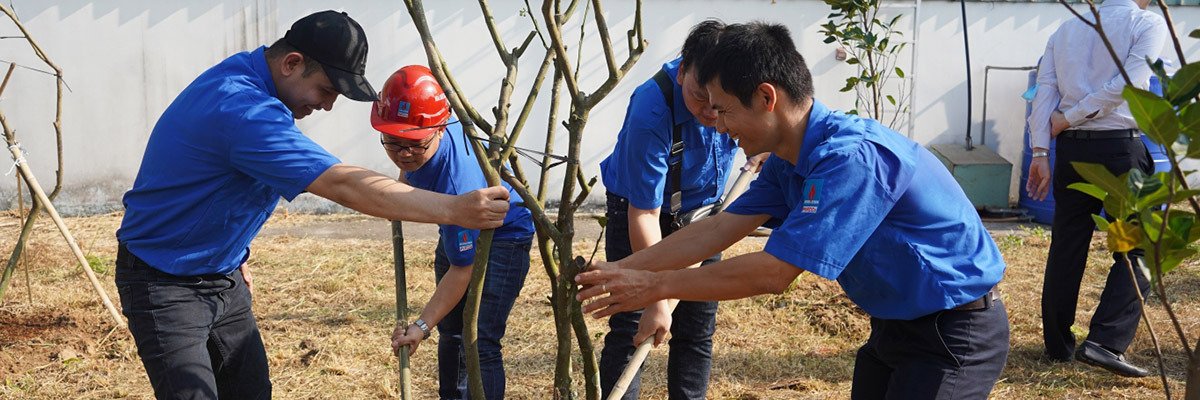
Implemented a tree planting program with a target of 300,000
trees during 2022–2025.
Greenhouse gases reduction initiatives implemented in 2024 have contributed to overall greenhouse
gases emission reductions compared to 20225, including:
1
Increased the
capacity of the
NH3 Unit (without
increasing urea
capacity), allowing
sufficient CO2 from the capacity of the NH3 supply for
high-load
urea production, while stopping and preserving the CO2 Recovery Unit
(CRU)
at Phu My Fertilizer
Plant.
2
Studied the plan
to restart the CO2
recovery system at
Phu My Fertilizer
Plant to increase
production output
and sell commercial
CO2.
3
Temporarily stopped
compressors when
not needed, when
using high-pressure
gas sources, and/
or when the plant
operates the pipeline
system to recover
NH3 from storage
tanks back to the
central compressor..
4
Converted the
operating mode from
small steam turbines
to electric motors
when technological
conditions were
suitable.
5 In 2023, PVFCCo carried out turnaround maintenance activities, so production
activities were interrupted, and actual
production output was lower than in 2022 and 2024.
Conversion factors to CO2 equivalent to calculate total greenhouse gas emissions in
2024 based on the
following documents and instructions:
Natural gas, gasoline, DO:
Decision
No.
2626/QD
BTNMT dated October
10, 2022 of the Ministry
of Natural Resources and
Environment and Guidelines
of the Intergovernmental
Panel on Climate Change
(IPCC).
Net electricity consumption:
Vietnam’s
grid
emission
factor in 2023 is specified
in
Official Dispatch No.
1726/BĐKH-PTCBT
dated
December 3, 2024 of the
Department
of
Climate
Change - Ministry of Natural
Resources and Environment.
Global Warming Potential
(GWP) Factor:
IPCC 6th Assessment Report
2023 and Circular No.
01/2022/TT-BTNMT dated
January 7, 2022
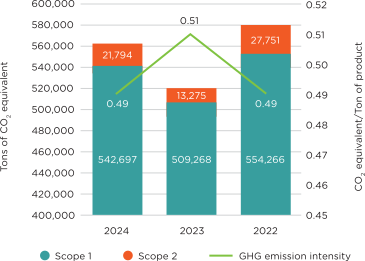
PVFCCo’s total Scope 1 and Scope 2 greenhouse gas emissions in 2024
showed a decreasing trend compared to 2022 (two years of stable
production and no turnaround maintenance) demonstrating the
effectiveness of emission reduction efforts. The average greenhouse
gas emission intensity per ton of products produced in both years
remained similar, indicating that the initiatives implemented by
Phu My Fertilizer Plant toward the Net Zero goal have delivered
remarkable results. PVFCCo is researching to implement greenhouse
gases measurement and calculation across individual production
lines to ensure readiness for compliance with forthcoming quota
requirements per ton of output in the future. Although greenhouse
gas emissions from office operations and fertilizer storage facilities
remain relatively low and stable over the years, PVFCCo and its
subsidiaries continue to explore and implement energy-saving
initiatives to help reduce indirect emissions.
PVFCCo is researching to implement greenhouse
gases measurement and calculation across
individual production lines to ensure readiness
for compliance with forthcoming quota
requirements per ton of output in the future.
REDUCTION OF EMISSIONS IN MANUFACTURING
Specific activities implemented include:
Fully complying with current legal regulations
related to emission monitoring, quality control,
and periodic reporting
Completely phasing out the use of HCFCs in accordance with the national roadmap under the Vietnam HCFC Phase-out Management Plan.
Periodically monitoring and annually reporting
the use of controlled substances in refrigeration
equipment, aiming to invest in completely
converting to “green” refrigeration equipment
using refrigerants not on the ODS list such as
R32, R410A, R134A, with low GWP (Global
Warming Potential) which is safer for the ozone
layer and the ecosystem.
Proactively controlling the use of ozone
depleting substances (ODS) and minimizing the
refilling of ODS, except in cases of force majeure
such as equipment leaks requiring the addition
of 13.6 kg of R22 refrigerant equivalent to 0.0075
tons of CFC-11 in 2024.
Strictly implementing emission monitoring
and control in accordance with the National
Technical Regulations issued by the Ministry of
Natural Resources and Environment, including
QCVN 19:2009/BTNMT on industrial emissions
of dust and inorganic substances, and QCVN
21:2009/BTNMT on emissions from chemical
fertilizers production.
Installing an automatic, continuous emission
monitoring system and transmitting data
directly to the Department of Agriculture and
Environment, ensuring that emission quality is
monitored and controlled in real time to support
accurate and timely environmental management
at Phu My Fertilizer Plant.
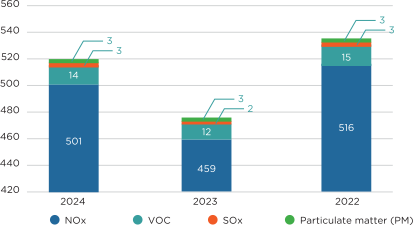
The measurement of pollutant emissions is estimated based on the production of Urea, NH3 and the
amount of natural gas consumed at Phu My Fertilizer Plant each year according to the Emission
Accounting
Guidelines for Oil and Gas Activities issued together with Decision No. 445/QD-DKVN dated
January 25,
2022 of the General Director of Vietnam National Industry - Energy Group6. The results showed
that
PVFCCo’s emissions in 2024 have decreased slightly compared to 20227:
Significant air emissions (Unit: Kg)
6 Vietnam Oil and Gas Group is now the Vietnam National Industry and Energy
Group.
7 In 2023, PVFCCo carried out turnaround maintenance activities, so production
activities were interrupted, and actual
production output was lower than in 2022 and 2024.
MINIMIZING ENVIRONMENTAL
POLLUTION
Preventing and minimizing environmental pollution to avoid
harming the ecosystem, natural environment, and the lives of
local people around the factory and business headquarters is a
mandatory responsibility of every enterprise according to the law.
Recognizing that, PVFCCo establishes and operates an environmental impact
management system in compliance with the following principles:
1
Implement synchronous risk prevention work from the site design stage,
production, and business operation to impact management, closely following
the principle of proactive prevention and strictly complying with current legal
regulations.
2
Assess compliance with legal regulations and standards of the Oil and Gas
industry using specialized copyright software such as LEAK and PHASTRISK,
using data sets to analyze consequences, incident frequency and actual
environmental conditions at the plant site
3
Complete the environmental impact management system, proactively monitor,
control and handle waste sources to ensure all activities comply with the law
and minimize impacts on the soil, water, and air environment
4
Promote programs that propose continuous improvement initiatives in
environmental impact management and protection.
Regarding wastewater management activities, PVFCCo always emphasizes controlling the impact on
surface water and groundwater around the Phu My Fertilizer Plant area while making efforts to
reduce
water consumption to contribute to protecting water resources. Commitments and activities have
been
implemented to achieve this goal and orientation, including:
Periodic monitoring
frequency at the wastewater
treatment system with a
capacity of
m3/per day-night
at Phu My Fertilizer Plant
Everymonths
The periodic wastewater
monitoring frequency
for office buildings and
fertilizer storage buildings
Everymonths
Integrate wastewater monitoring and treatment activities into the ISO
14001:2015 environmental management system to ensure risk control, legal
compliance, and safe operation maintenance.
Maintain wastewater collection and treatment systems to ensure treated
water meets the standards of QCVN 14:2008/BTNMT (domestic wastewater),
QCVN 40:2011/BTNMT (industrial wastewater), and the acceptance criteria
of IZICO Industrial Zone, Chon Thanh Industrial Zone, and Nhon Bình
Industrial Cluster before discharge into the natural environment or transfer
to centralized treatment systems; ensure the centralized production
wastewater treatment system at Phu My Fertilizer Plant operates stably at a
capacity of 680 m3/per day, with treated water meeting Column A standards
under QCVN 40:2011/BTNMT before connection to IZICO’s system.
Operate wastewater treatment systems according to design and comply with
the contents presented in the Environmental Impact Assessment Report,
Certificate of Environmental Protection Works, Environmental License and
Discharge License No. 2458/GP-BTNMT dated September 23, 2015.
Develop a safety plan and emergency response plan for wastewater-related
incidents, proactively suspend production and business activities when
incidents arise to implement the approved response plan.
Preliminary treatment of domestic wastewater generated in the office
area and warehouse of Phu My Fertilizer Plant using a 03-compartment
waterproof septic tank with a cement mortar-coated concrete structure and
reinforced concrete cover before connecting to the wastewater collection
system of Phu My Fertilizer Plant.
Installing an automatic continuous cooling wastewater monitoring system
(to Thi Vai River) at Phu My Fertilizer Plant and transmitting monitoring data
directly to the Department of Natural Resources and Environment of Ba Ria - Vung Tau
province, combined with periodic monitoring every 2 months
(with analysis by an independent unit with the function) to compare data
and evaluate the stability of the treatment system.
Periodically monitor industrial and domestic wastewater of the Factory and
Fertilizer Offices/Warehouses every 3 or 6 months by a competent unit.
Research solutions to reuse treated wastewater for non-production
purposes such as watering plants, industrial cleaning or cooling, thereby
moving towards a circular production model, saving resources, and reducing
the amount of wastewater discharged into the environment.
Regularly organize internal training to raise awareness among staff about
water resource protection and environmental compliance.
The results of statistics on the amount of wastewater discharged into the environment through
channels
from Phu My Fertilizer Plant (according to automatic meters for surface water and invoices for
transferring
wastewater to IZICO’s centralized wastewater treatment system for industrial wastewater) and 04
subsidiaries (estimated according wastewater flow meters at the PVFCCo South-East, and estimated on
domestic water supply volumes in accordance with current legal regulations for the PVFCCo
South-West,
the PVFCCo Central, Hai Phong Warehouse under the PVFCCo North, and warehouses managed by the
PVFCCo South-East) in recent years are as follows:
Target
Unit
2024
2023
2022
Surface water (cooling water
discharged into Thi Vai River)9
m3
30,782,437
27,837,073
30,920,987
Discharge to a third party
m3
177,886
203,677
152,737
9 The 2023 figure is lower because PVFCCo conducted turnaround maintenance and
production activities were interrupted, the
actual production output was lower than in 2022 and 2024.
PVFCCo is striving to research into implementing more innovative
measures to minimize wastewater generation during core
production operations. Optimization measures for cooling water
used in the production of fertilizers and chemicals have been
implemented, resulting in a reduction of wastewater discharged
Periodic monitoring frequency at the wastewater treatment system
with a capacity of wastewater at the Phu My Fertilizer Plant and
domestic wastewater from office buildings where subsidiaries are
headquartered, although consistently managed in full compliance
with current legal requirements, have not shown significant
reductions. PVFCCo, along with its subsidiaries and affiliated
units, continues to make efforts to implement initiatives aimed at
gradually reducing these wastewater volumes in the coming years.
Regarding waste management, PVFCCo maintains the implementation of a comprehensive
waste management system in accordance with ISO 14001:2015 standards and operates
the Waste Collection, Storage and Treatment Process at Phu My Fertilizer Plant according
to the following steps and regulations:
Waste classification
Classification,
collection
and storage
Transport waste to designated area
Hazardous waste storage and hazardous waste warehouse management
Contact the transfer contractor for processing
Keep records and conduct periodic reports
Integrate waste collection and treatment
activities into the ISO 14001:2015 environmental
management system to ensure risk control, legal
compliance, and safe operation maintenance..
Classify, collect, and treat waste generated at all
business establishments in accordance with legal
regulations, including hazardous waste, regular
industrial solid waste and domestic waste
Research and implement initiatives that optimize
the use of natural resources while minimizing the
amount of waste released into the environment.
Orientation to classify waste types with potential
for recycling or recovery in order to implement
solutions for reuse, recycling, and resource
recovery from waste.
Periodically collect and transfer all types of waste generated to units with sufficient
professional capacity and legal practice licenses in compliance with current legal
regulations – Health – Safety- Environment Department and
environmental officers at other units
Require the competent unit to arrange
appropriately trained personnel and use
specialized vehicles to thoroughly collect daily
domestic solid waste at PVFCCo’s offices,
warehouses, and auxiliary facilities.
Require waste treatment partners to provide
complete legal documents, including valid
practice licenses, personnel capacity records,
specialized vehicles and Safety - Health -
Environment performance assessment tables.
Require partners to treat waste by landfill
or incineration or other reasonable methods
in
accordance with relevant current legal
regulations and not harmful to the environment,
safe for people living around the treatment area
The volume of waste generated from PVFCCo’s production and
business activities changes year to year. It depends not only on
output and operating days, but also on objective factors such as
maintenance cycles, equipment material lifespans, and catalyst
usage. Specifically, in 2022, an activity arose of transferring a
Transport
waste to
designated
area
Hazardous waste
storage and
hazardous waste
warehouse
management
Contact
the transfer
contractor
for
processing
Keep records
and conduct
periodic
reports
under the direct supervision of the Factory’s
Health - Safety - Environment Department and
environmental officers at other units.
• Require the competent unit to arrange
appropriately trained personnel and use
specialized vehicles to thoroughly collect daily
domestic solid waste at PVFCCo’s offices,
warehouses, and auxiliary facilities.
• Require waste treatment partners to provide
complete legal documents, including valid
practice licenses, personnel capacity records,
specialized vehicles and Safety - Health -
Environment performance assessment tables.
• Require partners to treat waste by landfill
or incineration or other reasonable methods
in
accordance with relevant current legal
regulations and not harmful to the environment,
safe for people living around the treatment area.
substantial volume of backlogged wooden pallets accumulated from
previous years to authorized disposal facilities. In 2023, the company
executed an overall maintenance operation, which generated a
large amount of sludge and spent catalysts. Furthermore, in 2024,
a quantity of hazardous wastewater (approximately 220 tons)
arose during the catalyst changeout process of the UFC85 unit,
accompanied by an increase in hazardous-contaminated wiping
rags (around 42 tons) resulting from maintenance activities at the
NPK Factory. PVFCCo consistently complies with all applicable legal
regulations governing hazardous waste control and treatment and
will continue to strengthen monitoring and management practices
to progressively reduce hazardous waste generation over time.
The statistical results of the amount of waste generated in 2024 by PVFCCo are as follows
Target
Unit
2024
202310
2022
Scope 1
How to measure
Total hazardous waste
Ton
303
403
78
Phu My Fertilizer Plant, Petrochemical Business Branch and 04 subsidiaries
Actual weight
Total non
hazardous
waste
Ton
486
1,447
1,285
Domestic waste generated
at Phu My Fertilizer Plant.
Actual weight
By the end of 2024, PVFCCo did not record any environmental incidents or violations of the law
related to
waste or wastewater. In addition, PVFCCo also diverted 63 tons of waste from the conventional
treatment
process by:
33tons
More than 33 tons were
prepared
for
reuse,
contributing to extending
the material life cycle and
reducing the need for new
resource consumption;
17tons
17 tons were put into
the recycling process,
supporting the regeneration
of input materials; and
13tons
The remaining 13 tons are
used for other purposes such
as internal reuse, research
testing or alternative energy.
10 The 2023 figure is higher because PVFCCo conducted turnaround maintenance
activities and generated a lot of hazardous
waste from cleaning, sanitation, etc. of machinery and equipment.
ENHANCING NATURAL
RESOURCE EFFICIENCY
Fertilizer and chemical production activities at PVFCCo primarily rely on fossil fuels (natural
gas) and
inorganic catalysts - both finite resources. Recognizing this characteristic, PVFCCo prioritizes
research
and implementation of programs and initiatives aimed at improving the efficiency of natural
resource use
and identifying convertible raw materials to ensure long-term sustainable development. Key
initiatives
implemented in recent years include:
Controlling the amount of raw materials used
in production and business activities, and
proposing solutions and initiatives to save raw
materials, optimize efficiency, and increase the
use of renewable materials.
Implementing a green transformation strategy
in production by gradually replacing natural gas
(NG) with green hydrogen (H2), liquefied natural
gas (LNG).
Collaborating technically with international
partners such as GIZ, SK E&S Renewable Energy
(Korea), and The Green Solution to assess the
feasibility and roadmap for integrating green
H2 into existing production chains using solar
powered water electrolysis.
Avoiding the purchase of new wooden pallets
and prioritizing the reuse of existing ones from
previous years, while gradually switching to
more environmentally friendly plastic pallets and
sling straps.
Promoting digital transformation in
production, business, and internal management
to significantly reduce the amount of printed
paper used for document storage in accordance
with regulations.
The results of measuring the amount of renewable and non-renewable materials used over the years
by
PVFCCo are shown in the following table:
Group
Raw materials
Unit
2024
20238
2022
Non-renewable
materials
Natural gas
MMBTU
12,262,431
11,164,776
12,652,383
Chemical
Ton
17,134
18,559
19,557
Plastic beads
Liter
28,665
75,079
53,204
Renewable
materials
Paper (printing)
Kg
4,078
4,504
Not yet counted
Plastic packaging for
fertilizer products
Kg
3,399,887
3,261,021
Not yet counted
8 In 2023, PVFCCo carried out turnaround maintenance activities, so production
activities were interrupted, and actual
production output was lower than in 2022 and 2024.
Material consumption depends on production output and the number of operating days each year.
Year-on-year fluctuations are also influenced by several external factors:
Natural gas
used as a feedstock in the production process, varies
over time even when output remains stable. This is
due to changes in gas composition from different
fields in specific periods.
Chemicals/
plastic resins
fluctuate due to operational needs which changes
based on the operational lifespan of each chemical
type.
Packaging
materials
vary depending on production output and customers’
requirements. Consumption levels affected by
packaging specifications (e.g., 50 kg bags, 1,000 kg
containers, or bulk shipments without packaging).
Paper (priting)
used for printing decreased significantly in 2024
compared to 2023, thanks to the adoption of digital
platforms under the “Digital Office” program – one
of key initiatives in PVFCCo’s long-term development
strategy.
PVFCCo maintains strict control over material consumption.
All usage is monitored and managed according to approved
consumption norms.
CONSERVATION OF BIODIVERSITY,
WATER AND SOIL QUALITY
casuarina trees
planted to green sandy areas, retain soil, and
block wind in the Truong Sa region (as part of the 300,000-tree planting program)
trees
planted during 2022–2025
Key policies and activities include:
Avoiding the construction and operation of business
facilities in or near nature reserves, areas with high
biodiversity, or sensitive habitats, as classified by
domestic authorities and international organizations.
Conducting periodic biodiversity impact assessments
in the Thi Vai River area and regularly identifying risks,
determining conservation options for species listed in
the IUCN Red List or Vietnam’s priority protection list,
and handling invasive species in aquatic environments
when detected.
The use of inorganic fertilizers
can significantly impact the soil
environment and potentially
affect biodiversity in areas
surrounding agricultural zones.
Recognizing this, PVFCCo not
only conducts impact assessment
programs and implements
initiatives to conserve biodiversity
around the Phu My Fertilizer Plant
but also promotes soil protection
during the use of its products
by farmers.
Contributing actively to building a sustainable
agricultural ecosystem through awareness
raising and training programs for end users
(farmers), such as the “AI in Agriculture”
workshop and technology introduction sessions
on monitoring cultivation and irrigation
to increase productivity while minimizing
environmental impact, etc.
Coordinating with Navy Region 4 to plant
100,000 casuarina trees (as part of the 300,000
tree planting program for 2022–2025) to green
sandy areas, retain soil, and block wind in the
Truong Sa region. These trees also help improve
soil quality through biological nitrogen fixation
via symbiotic roots with Frankia bacteria,
supporting vegetation restoration in harsh
conditions
Focusing on research and development
of organic fertilizers, biological products,
biopesticides, water-retaining gels, and
improved fertilizer lines to reduce chemical
residues in soil and water—key factors in the
decline of beneficial organisms and ecosystem
imbalance. These efforts also protect soil
microorganisms, beneficial insects, and wildlife
in cultivated areas, optimize resource use, and
limit overexploitation of natural water sources.
Applying research and conducting field trials
to evaluate the effectiveness of new products
under various farming conditions, ensuring
suitability and sustainability for large-scale
deployment.
Improving the quality of existing products to
enhance crop effectiveness while minimizing
negative impacts on water resources and soil
nutrients.
SEFFICIENT USE AND CONSERVATION OF WATER
Although PVFCCo does not operate in areas at risk of water scarcity, the Corporation remains
committed
to economic and efficient water use to support overall water security. Key principles and
actions include
Fully complying with current legal regulations
related to surface water exploitation and input
water use
Integrating water protection solutions into the
construction system right from the design stage
to prevent environmental risks and maintain
stable water treatment performance
Controlling input water quality in accordance
with QCVN 08:2023/BTNMT for surface water
and QCVN 01:2009/BYT for domestic water..
Equipping facilities with modern monitoring
systems featuring warning and incident
response functions to manage water quality and
f
low throughout the production cycle.
Periodically monitoring and evaluating water
usage efficiency across all key areas: Ammonia,
Urea, NPK production, auxiliary zones, living
areas, cooling systems, offices, apartments, and
warehouses
Conducting periodic monitoring 4 times/year
for receiving water sources.
Reporting annually on water exploitation,
use, discharge, and environmental protection
activities to competent authorities.
PVFCCo also implemented several initiatives to save water and increase recycling rates, including
:
Storing and recycling excess dust washing water from the NPK fertilizer production process
for reuse
in subsequent stages at the NPK Unit.
Promoting economical water use, especially in sanitary areas, to help reduce domestic water
consumption
The statistical results of the input water usage of Phu My Fertilizer Plant and 04 subsidiaries
in the years
are summarized based on surface water flow meter readings and water supply invoices as follows:
Unit
2024
2023
2022
Surface water
m3
32,390,084
29,568,334
32,093,753
Water supply
m3
770,729
848,215
906,262
The trend of decreasing water consumption over the years clearly
reflects the results of implementing initiatives to optimize water
consumption in PVFCCo’s core production and business activities.
The amount of surface water has increased but not significantly
due to the impact of weather conditions in each period. In the
following years, PVFCCo will continue to fully record the amount
of water consumed at all affiliated units and subsidiaries, and at
the same time promote the communication of the culture of using
water economically and effectively throughout the Corporation to
contribute to protecting the precious water resources of nature.